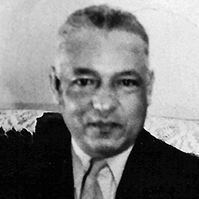
Unassuming, dedicated and diligent, Vincent Leroy Lee was one of Bermuda’s first Black architects and the second Black person to represent Southampton in the House of Assembly. He designed homes, commercial buildings and churches, among them Spot Restaurant, the Salvation Army’s Newlands Corps, Evening Light Tabernacle and Vernon Temple parsonage, the Bassett and the Recorder buildings on Court Street, as well as Somerset Cricket Club and Southampton Rangers. He was also the architect for renovations carried out at St. George’s and Clay House Inn.
Outside of his profession, he was deeply committed to public service: he had a strong interest in education, and he successfully lobbied the Government to build a new primary school in Southampton (which became Heron Bay Primary). He served on several boards and drew plans pro bono for organisations he held dear.
|
 |
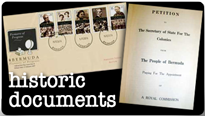
A petition, signed by 536 Black men, was submitted to the Government to protest plans to bring in additional Portuguese workers.
The first Portuguese immigrants had arrived from Madeira in 1849. In September 1855, Parliament set aside £1,000 pounds to promote further immigration. That decision took the Black community by surprise, and within two weeks a document comprising six pages of “reasoned argument” and “16 pages of signatures” had been drawn up, according to historian Dr. Kenneth Robinson.
The petitioners said that bringing in Portuguese workers would benefit the Island’s white employers, but would work against the interests of Black employees. Importation would depress wages, and while Portuguese workers would be single young men, Black workers had families to support. Portuguese workers would also send their earnings back home, while the earnings of Black Bermudians would remain on island. The petitioners also pointed out they had not been voluntary settlers to Bermuda, but had been brought to the Island and forced to work “for the advantage of others.”
The petition was unsuccessful. But Robinson, writing in Heritage, called it “striking and impressive” that 21 years after Emancipation, Black Bermudians had presented “an eloquent and effective submission.”
| 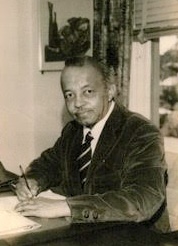
Dr. Kenneth Robinson: “an eloquent and effective submission.” (Photo courtesy of Shirley Pearman)
|